

Compression socks are made through a controlled sequence that connects product development with repeatable production. The process starts before a knitting machine runs: the intended product, wearer, construction, materials, sizing and presentation all need to be translated into a workable manufacturing brief.
At ARKSocks, the confirmed sequence is product development, sampling, approved reference, knitting, finishing, inspection and packing. The details vary by product. Production is checked against the approved physical reference and current product instructions.
What happens during product development?
Product development converts a commercial idea into manufacturing requirements. A useful brief identifies the intended product and use case, the target wearer, the required size range, material preferences, construction direction, branding and packaging. A reference sample can clarify proportions, hand feel or visual intent, but it should be accompanied by an explanation of what the brand wants to keep or change.
For compression hosiery, development also requires careful discussion of fit, leg and foot dimensions, stretch behavior, support zones and overall construction. These points cannot be resolved by artwork alone. They need to be considered together because yarn choice, stitch structure, dimensions and finishing can influence one another.
Why is sampling a separate manufacturing stage?
Sampling creates the first physical reference for review. It allows the manufacturer and brand to examine construction, sizing, appearance, branding placement and material behavior before production quantities are involved. A sample may reveal that an instruction which looked clear on paper needs adjustment when knitted.
Review should be specific. Instead of responding only that a sample feels right or wrong, a buyer can identify the exact area to change: foot length, cuff construction, logo position, color, packaging or another defined point. Clear feedback reduces ambiguity in the next sample round.
Sample rounds vary with product complexity, the completeness of the brief and the distance between the first sample and the intended product. Production should begin only after the sample direction is resolved.
What is an approved reference?
The approved reference is the identifiable physical basis for production and later inspection. Specifications, colors, packaging instructions and approved changes should point to the same current version.
How does knitting move a sample into production?
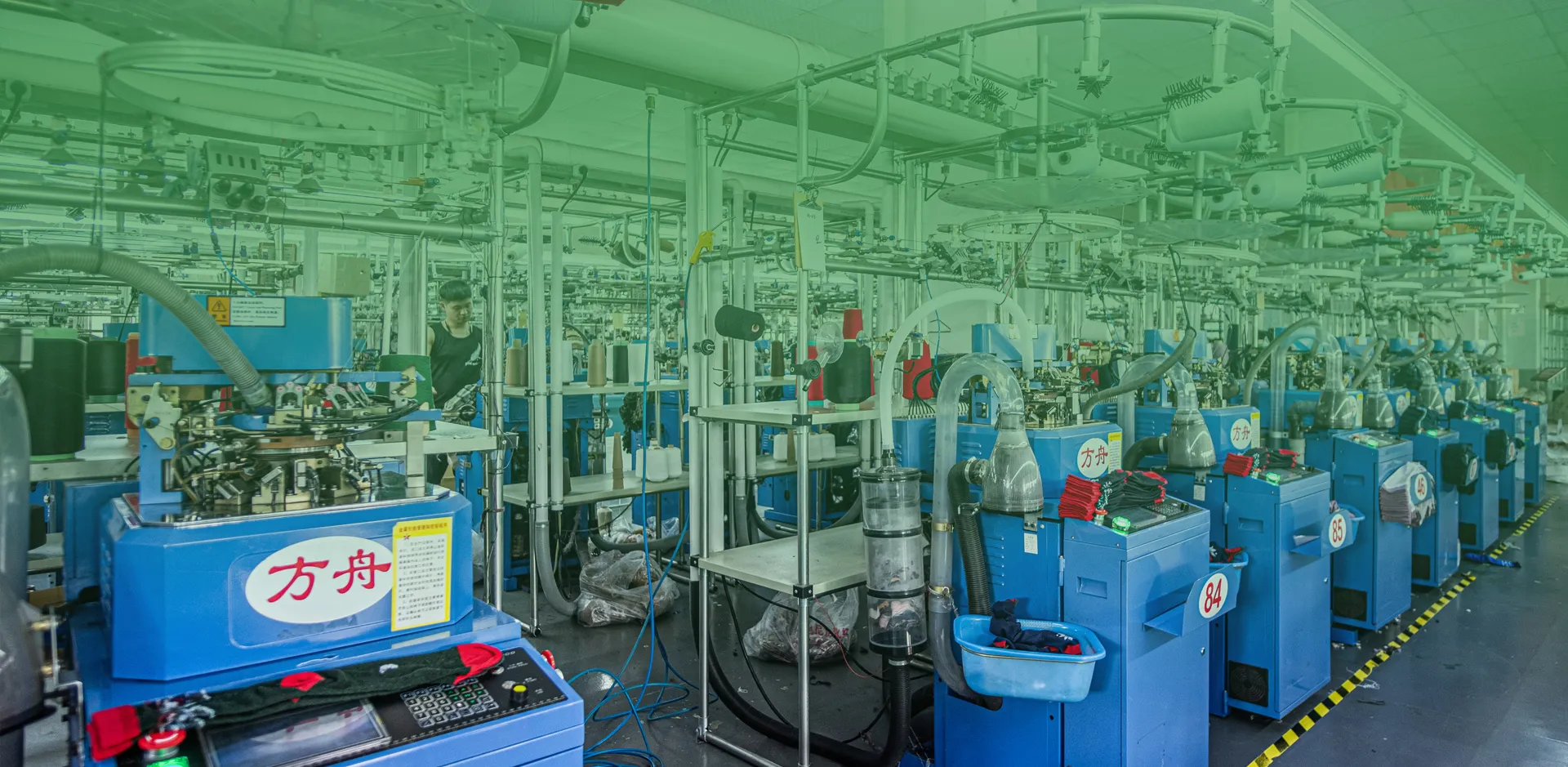
During knitting, the approved construction is translated into machine production. Yarn preparation, machine setup and production instructions need to correspond with the confirmed product. Operators monitor the work and respond to issues that would prevent the output from matching the approved direction.
Knitting is highly visible in a sock factory, but it is not the whole manufacturing process. A knitted item still needs the specified finishing, checking and presentation steps. Treating knitting as one connected stage—rather than the entire job—helps buyers ask better questions about how a factory controls the product after it leaves the machine.
What do finishing, inspection and packing add?
Finishing completes the post-knitting steps required by the construction and agreed specification. The sequence depends on the product rather than a single standard route for every sock.
Inspection checks production output against the approved reference and applicable requirements. Useful inspection is disciplined and repeatable: the team needs to know which characteristics are being checked, what reference applies and how a nonconforming result is handled. Visual appearance, workmanship, dimensions, pairing and presentation may all be relevant depending on the project.
Packing is the final manufacturing checkpoint. Labels, pairs, cartons and other packaging elements should follow the approved brief. Accurate packing matters to B2B buyers because a correctly made product can still create problems if market information, assortments or presentation are wrong.
Before production release, buyers should confirm:
- Approved product reference
- Current artwork version
- Label and packaging files
- Size designation
- Approved color reference
How can a brand prepare for a smoother production process?
A clear brief, responsive sample feedback and controlled approvals make the greatest practical difference. Brands should identify decision owners, consolidate comments and avoid changing several connected specifications without reviewing their combined effect.
Separate confirmed requirements from preferences that are still open. This helps the manufacturer focus development work and flag decisions that must be resolved before production.
FACTORY MEDIA
See the manufacturing environment.
EPISODE 001 · Factory Introduction
Factory Introduction
A broader look at the ARKSocks factory, its production spaces and daily manufacturing work.
EPISODE 003 · Knitting Floor
Our Knitting Floor
A look across active machines and day-to-day work on the ARKSocks knitting floor.
FAQ
Practical questions
Does compression sock production begin with knitting?
No. It begins with product development and a manufacturing brief. Sampling and approval establish the reference used for knitting and later inspection.
Why is an approved sample important?
It gives the brand and manufacturer a shared physical reference for construction, sizing, appearance and other confirmed requirements before production.
Is every compression sock made with the same process details?
The seven-stage framework is consistent, but materials, construction, finishing and inspection details depend on the individual product specification.
ABOUT ARKSOCKS
Zhejiang Ark Industry Co., Ltd.
Zhuji, Zhejiang, China
Manufacturing hosiery since 2003.